The Storm May 14, 2026 david
Phishing for Mary
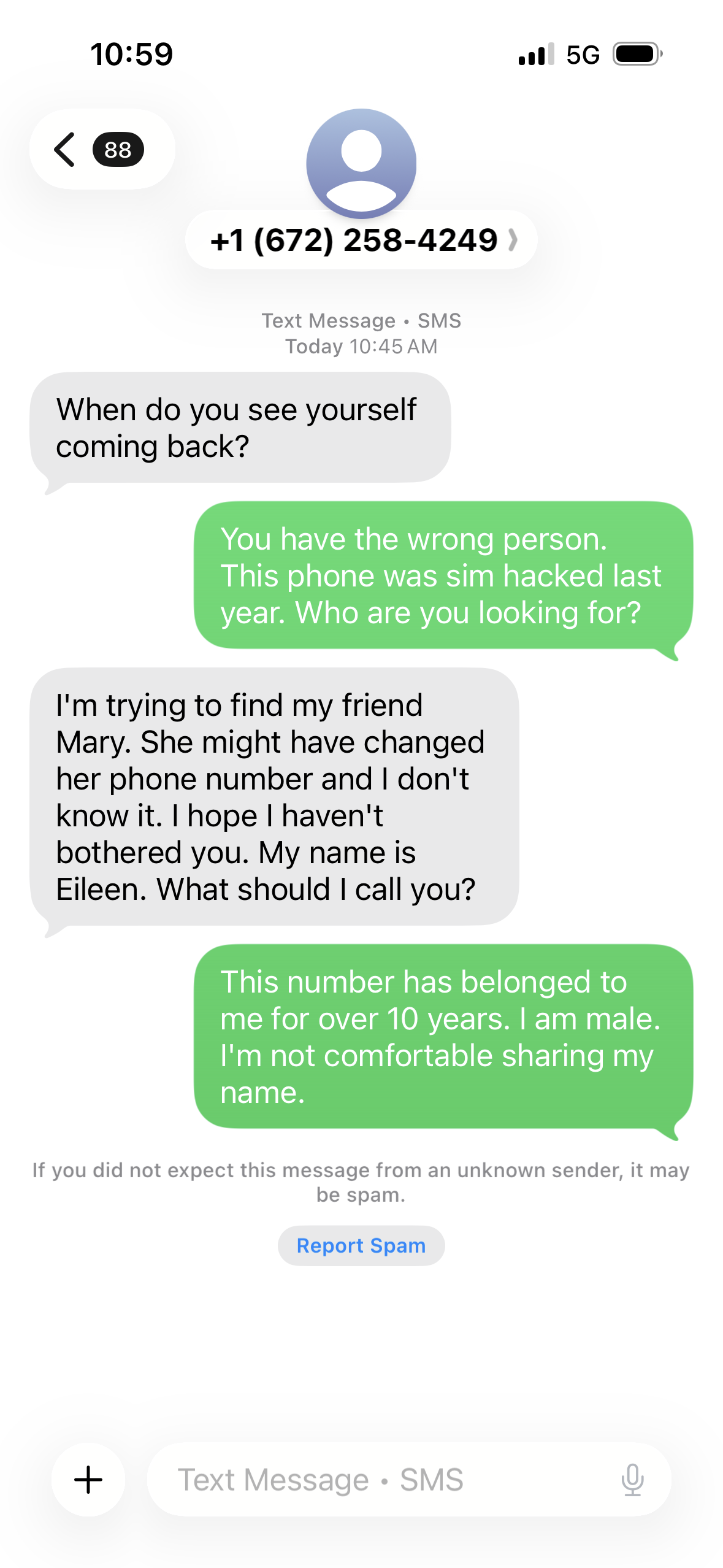
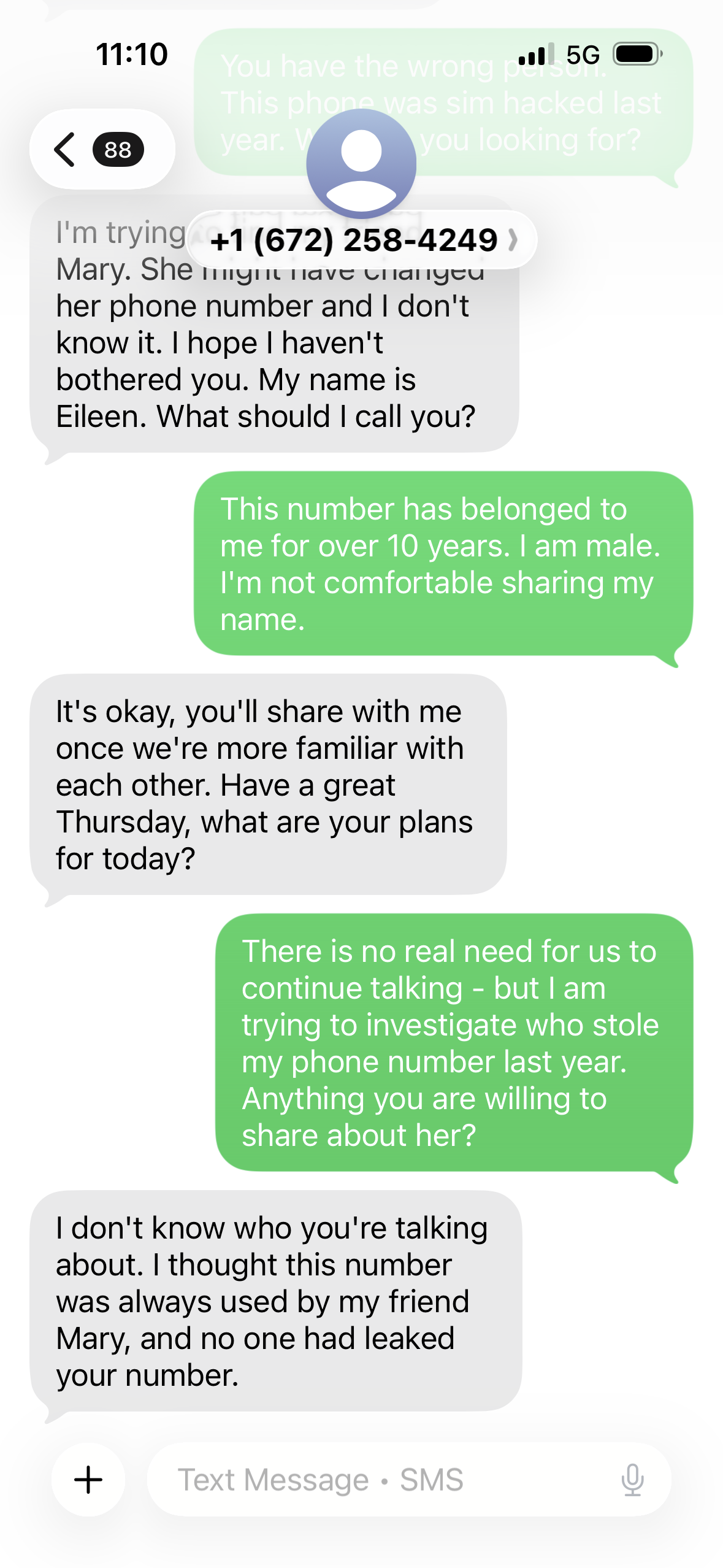
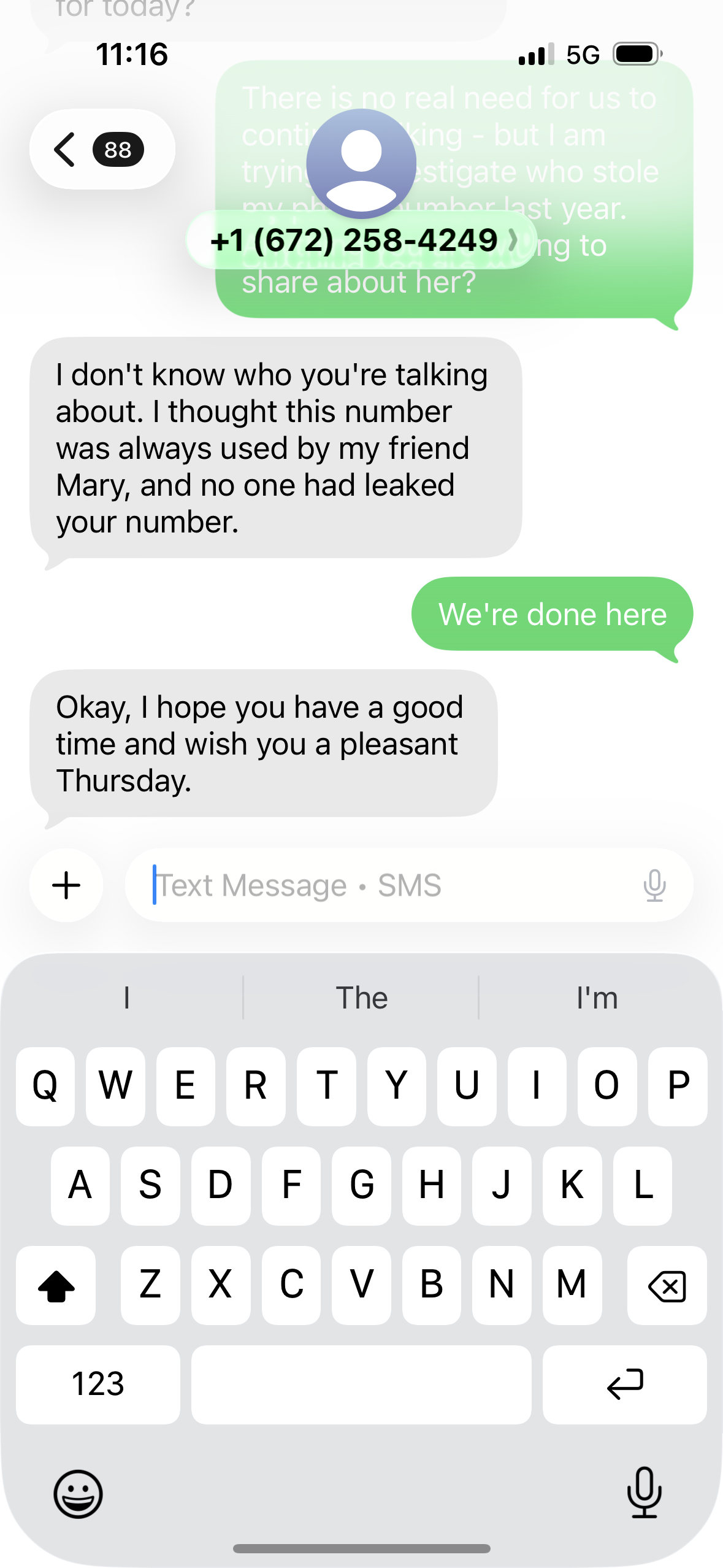
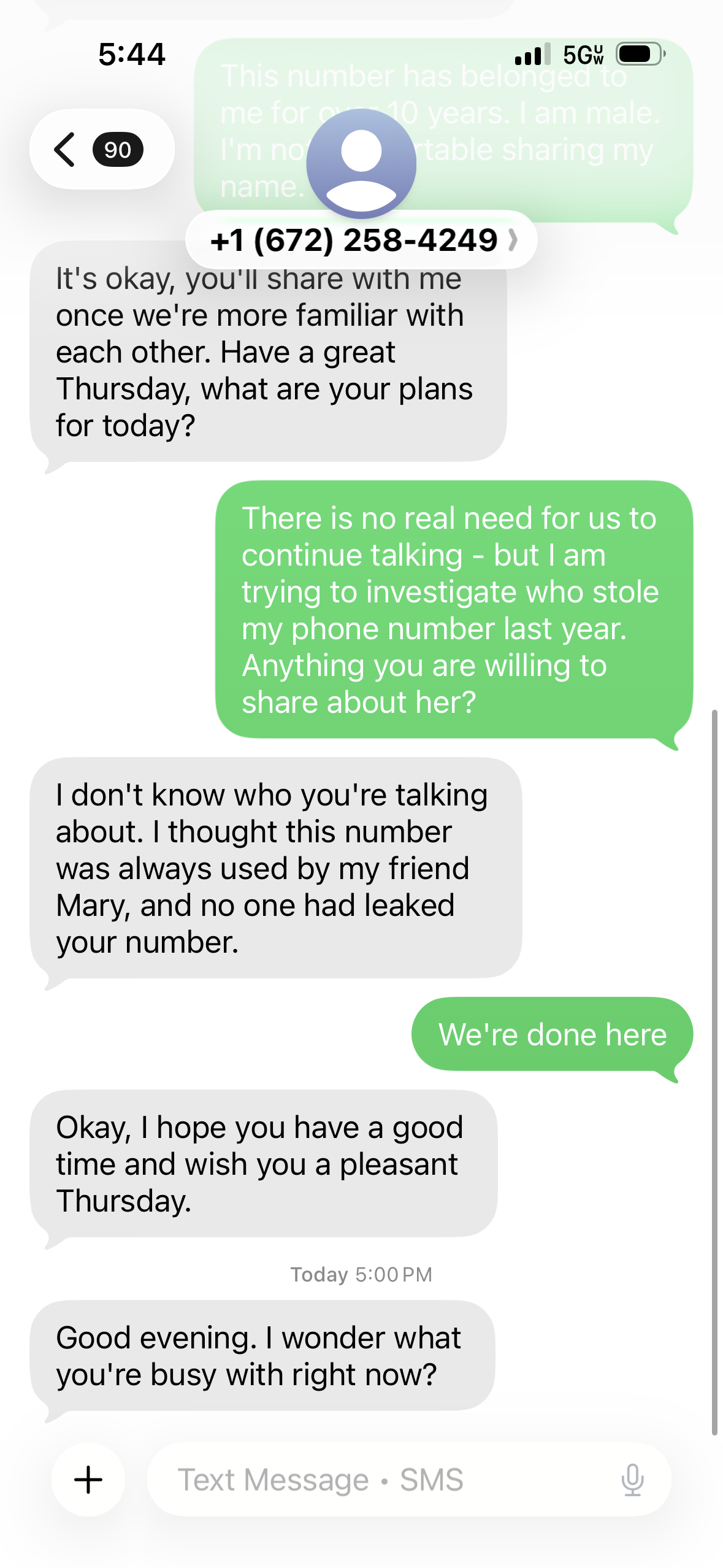
An hour-long SMS conversation with a sender persistently working a hop-seeding pretext — "Eileen" looking for her old friend "Mary", who supposedly used this number. Includes an explicit rapport-building line and a re-engagement attempt six hours after the conversation ended.
A hop-seeding opener that walked all the way through the script — pretextual contact, polite misdirection-handling when challenged, rapport invitation, and a re-engagement attempt that afternoon after the conversation had been formally closed.
The opener was a single line at 10:45 AM: "When do you see yourself coming back?" — addressed to nobody, inviting any reply at all. I replied that the recipient they thought they were reaching was not me, that the number had been SIM-hacked the year before, and asked who they were looking for. The sender pivoted to the next module: an old friend named "Mary" who supposedly used to use this number, and who they had lost touch with. Their own name, they said, was "Eileen."
When I told them my actual demographic context did not match the friend they were looking for, they did not let go. The reply was the line that names the whole operation: "It's okay, you'll share with me once we're more familiar with each other. Have a great Thursday, what are your plans for today?" That is the rapport-building module quoted directly — the deliberate move past the failed first pretext into the long-con phase.
I told them there was no real reason to keep talking, but asked if they could share anything about "Mary" — to test whether the friend was a real person or part of the script. The reply tried to flip the framing on me: "I don't know who you're talking about. I thought this number was always used by my friend Mary, and no one had leaked your number."
I closed the conversation. "We're done here." They sent a polite sign-off.
Six hours later, at 5:00 PM, the same number sent a fresh message: "Good evening. I wonder what you're busy with right now?" — the re-engagement module, designed to bypass the formal close and start the conversation fresh as if the morning had not happened. I did not reply.
What this entry documents, in addition to the structured data: a script with at least four distinct modules — pretext, rapport-building after the pretext fails, narrative-flip when challenged, and timed re-engagement after a no.
