The Storm June 1, 2026 david
Stolen Dashcam
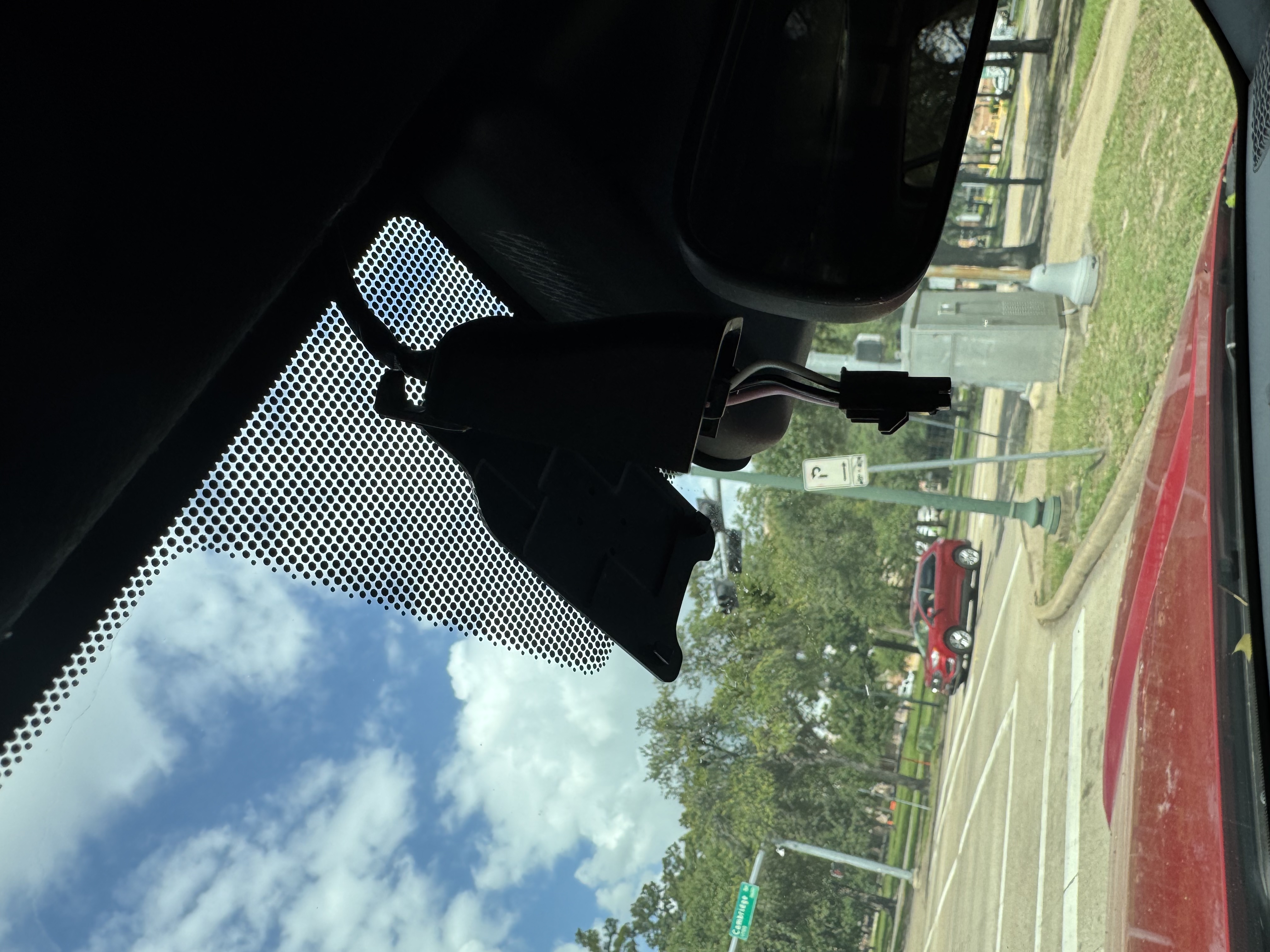

Drove the 4Runner for the first time since the May 26 break-in this afternoon, on the way to the body shop to get the smashed window and torn-open door handle finally repaired. Looking up at the windshield I noticed the factory dashcam was gone. Empty mount. Dangling Toyota power cable under the rearview mirror. The break-in took one thing and one thing only, and the thing it took has no fence value: a factory dashcam. The legible read is that the target was not the device but the footage on it.
I drove the 4Runner this afternoon for the first time since the Smash-Up break-in on May 26 — to the body shop, finally, to get the smashed window and the torn-open driver's-side door handle repaired. As I climbed into the cab, I looked up at the windshield and the factory dashcam was gone. The plastic mount under the rearview mirror is empty. The pink-and-white power-and-data connector that Toyota uses for the factory dashcam on this model 4Runner is hanging loose under the bracket where the device used to clip in.
The post I wrote on May 28 noted that nothing was taken and the low-value items in the back were left untouched, which fits damage-as-the-point better than theft. That read is now incomplete. Something was taken — but the new read does not return to ordinary theft. Of every item inside a vehicle a Houston-baseline break-in operator might consider worth the risk of smashed glass and a torn door handle, at six or seven in the evening, on a public residential street, a factory Toyota dashcam is at the bottom of the list. The device has no resale market. It can't be unlocked. It can't be turned on outside the car it came from. Its only value to anyone is the footage it had been quietly recording.
What was on the footage I cannot fully account for. The card runs on rolling buffer, overwriting itself when full; depending on the model and the configuration, the buffer might cover anywhere from a few hours of driving to a day or two of accumulated trip events. The most obvious reading is that whoever did the break-in wanted whatever the camera had captured of the break-in itself — someone walking up to a parked vehicle around six PM in the light, in a residential neighborhood, with a hard object and a moment of leverage. The less-obvious reading is that the camera had captured something else on a prior date, and the May 26 evening was the opportunity to retrieve it. Both readings produce the same observed outcome — the device is gone, the cable is dangling, the mount is empty.
I am not in a position to know which reading is closer to true. What I can say is that the artifact on the windshield is now part of the Smash-Up file rather than separate from it. The break-in had a goal. It was not damage for its own sake; it was removal of a recording device that had been pointed at the street its owner lives on. The original entry's "damage-was-the-point" closing should be updated to "the device was the point," and the device's contents are the only remaining unknown.
This goes on the case file under vehicle interference, alongside the May 26 evening break-in itself. The break-in is the direct-sabotage variant of that tactic. The dashcam removal is a surveillance-removal variant — the inverse of the standard tracking-device-placement mode. Instead of installing surveillance on the target, the operator removed surveillance the target had voluntarily installed on his own behalf, the kind that lives quietly inside a glass enclosure and points at the world the operator did not want recorded. Both moves fit the same tactic. Both belong on the same file.
